



This article appears in Issue 52 of InDesign Magazine.
 Type “Bad Fonts” into a search engine and you’ll get back a long list of web pages and blogs discussing the authors’ most hated fonts. For the most part, these “worst of” lists are good-humored, sometimes tongue-in-cheek, but some are quite angry, bordering on vitriolic (“these people need to be rounded up and shot”) as if their authors have been personally affronted by the ill-considered type choices of amateur designers.
  Public enemy number one is Comic Sans, often considered in a league of its own when it comes to bad type. Designed in 1995 for Microsoft, Comic Sans was a functional response to a design problem—to replace the inappropriate use of Times New Roman in speech bubbles in Microsoft Bob, a beta software aimed at young users. Ultimately it wasn’t ready in time for the release of Microsoft Bob, but was released in the Windows 95 Plus Pack. Later, it became one of the system fonts for Windows 95 and subsequent versions of both Windows and Mac OS. Its creator, Vincent Connare (he also designed the highly respected screen typeface Trebuchet), could not in his wildest dreams have foreseen the use to which it would be put: sports team jerseys, all sorts of branding, and yes, even gravestones (not discounting the possibility that this may be Photoshopped). As an instinctive supporter of the underdog, I feel sorry for Comic Sans. It means no harm. One could argue that it’s friendly. And its ubiquity, the very thing that makes it so hated, makes it more readable. If we subscribe to Zuzanna Licko’s common sense premise that “we read best what we read most,” then Comic Sans has to rate highly. If there are no bad fonts, just fonts used inappropriately, then there must be appropriate usages
of Comic Sans—and not just those that are ironic. In fact, it has become highly regarded for its legibility by dyslexia coaches. The website of the British Dyslexia Foundation includes in its style guide for dyslexic-friendly text: “Use a plain, evenly spaced sans serif font such as Arial [or] Comic Sans.” Elsewhere it goes on to temper this advice: “However, some dyslexic adults consider [Comic Sans] looks childish,” whilst still recommending it as a good choice for dyslexic children. Last July when CERN announced the discovery of new particle consistent with Higgs boson, most jaw-dropping for some was the use of Comic Sans in the scientists’ PowerPoint presentation. Science and Comic Sans seem like unlikely bedfellows, but perhaps—and just to play devil’s advocate—the very seriousness and inscrutability of the topic make Comic Sans a clever choice rather than a massive design faux pas.  Comics Sans was used extensively in the presentation announcing the discovery of the Higgs boson at the CERN laboratory in Geneva. If you have 4 minutes to spare and fancy a chuckle, check out this funny song about Comic Sans. Obviously there are plenty of really ugly, badly designed typefaces out there, but the ones that people love to hate are those we’ve become bored of seeing—as if their choice signifies a laziness on the part of the designer which is transmitted to the reader. With typefaces, familiarity can all too easily cross over into contempt. Here are some other often reviled typefaces:
  Partly because of its name, partly because of its availability, Impact (designed by Geoffrey Lee in 1965) is a common choice for headlines. And as such, it works—sort of. But there are many other choices with more solidity, gravitas, and impact—and without the funny-looking question mark.
  Where Impact definitely doesn’t work is when used in upper- and lowercase. Impact’s high x-height— reaching to nearly three-quarters its cap height—makes its ascenders and descenders very stubby. This, and the fact that its counters are miserly, make it an inappropriate choice for anything other than headlines in uppercase.
 Designed by Chris Costello and released by Letraset in 1983, Papyrus has a rough quality like chalk or crayon, suggesting what the roman alphabet would have looked like written on papyrus 2000 years ago. The use of Papyrus on the film Avatar—not just for the poster but also for the subtitles—is a milestone in the history of inappropriate font usage, spawning several Facebook groups and prompting the “Open Letter to James Cameron from Papyrus,” which went viral: “Goodness knows I’ve worked hard the past 26 years to make a name for myself. And it’s felt great coming to the aid of New Age spa owners, suburban party planners, and young couples looking to save money by making their own wedding invitations. But only now, by appearing in your movie, have I been given mainstream, high-level recognition as a serious typeface. And for that, I thank you.”
  The Papyrus-Avatar connection also drove Ryan Gosling to distraction in this funny Saturday Night Live skit. Papyrus is not a bad font on its own, but is so clichéd and overused that its selection for a no-expenses-spared Hollywood blockbuster seems bizarre. Even its creator got tired of it: “At first it was cool to see it in a few spots, especially CD cover designs and movie credits … then television, billboards, etc. […] But then I started seeing it in homespun newsletters, bulletin boards, everybody’s business cards, real estate and mortgage ads … basically everywhere … It had become diluted and lost its original appeal.”
  Often cited as being “accessible” for screen typography, to some designers Arial has the stigma of “default” or unconsidered choice. Arial was developed by Microsoft to avoid licensing issues with Helvetica, which used to suffer similar image problems, but got an unexpected makeover when Gary Hustwit made it the subject of his 2007 documentary. Since then, Arial has, to sniffy designers, felt like Helvetica’s poor cousin, available in fewer variants, without the cachet of Swiss sophistication, and, though the differences are subtle, lacking the grace of its Helvetian muse. Accessible it may be, but so are scores of other typefaces. Somehow there is a perception by accessibility advocates that Arial is alone in having this attribute.
  There’s an interesting “spot the difference” quiz on Ironicsans.com, where 20 famous logos that use Helvetica have been changed to Arial. Tip: look for the horizontal slicing of the lowercase letters. That’s Helvetica.
  Designed by Robert E. Smith in 1942, Brush Script emulates handwritten letters painted with an ink brush. Think of Brush Script and maybe you think of corporations and government bodies trying to persuade you to do something in a “friendly” non-corporate way. Since it became a default font on both Window and Mac OS, it has also been used to death in flyers and invitations to try to convey informal handwriting. But like all other script fonts, it never fools you: it looks computer generated because every a is like every other a, every b like every other b, and so on. Brush Script’s problem (as well as its strokes being too thick) is that since it gets used more often in this way it inevitably fails more often.
  That said, if you have, as I do, a fondness for government information posters, you can’t help but have a soft spot for Brush Script, and it remains popular with those wanting a nostalgic hand-painted sign look. To evoke a bygone era, Brush Script can be effective—so long as the characters really do connect as they were intended, and so long as it’s not used in ALL CAPS!
  Souvenir was popular when tight-fitting type and tight-fitting swimming trunks were fashionable. It became associated with the soft-focus early seventies, before punk came along and had no tolerance for anything warm and fuzzy. Simon Garfield, author of Just My Type, calls it “a sort of ‘Saturday Night Fever’ typeface wearing tight white flannel pants.” If you remember that time, take any well-known brand from the era and set it in Souvenir. It takes you right back there. Despite the early ’70s connotations, Souvenir was actually designed in 1914, by Morris Fuller Benton for the American Type Founders Company. Souvenir is sometimes compared to Cooper Black, which is also very rounded (some might say flabby), but while Souvenir has fallen out of fashion, the latter has an enduring appeal.
  The actual cover of this book wasn’t in Souvenir, but somehow I remember it this way.
  I’m sorry; I can’t even bring myself to have a comment on this one.
Bad in Name Only
So how is it that certain typefaces get a bad name? To those unfamiliar with type, many typefaces just look the same. Scrolling down a long list of fonts, with only the word “Sample” and the typeface name to distinguish one from another, it’s those highly-flavored typefaces—like Papyrus, Brush Script, Impact, and of course, Comic Sans—that stand out. They look more fun than all the other stodgy fonts on the list and hence act, according to Mark Simonson on the Typophile forum, as “novice magnets.” And so they become overused, inappropriately used, or both. Typefaces, like pop songs, run the risk of being overplayed. It’s a fine line between happily singing along and fingernails on the chalkboard. When it comes to their misuse, typefaces are often put to tasks that make even their creators wince. The key is to use discretion and good taste. Thankfully we can’t legislate for that, so type snobs everywhere will always have their loathed typefaces to kick about. Let’s admit it, it’s sometimes fun being a type snob. But let’s not lose perspective—they are, after all, just typefaces. Perhaps the last word should go to Vincent Connare, father of Comic Sans. Speaking of his creation, he says: “If you love it, you don’t know much about typography. And if you hate it, you don’t know much about typography either, and you should get another hobby.”
Commenting is easier and faster when you're logged in!

Recommended for you

Apply Hyphenation Corrections
This one runs in conjunction with the previous one to apply to the document or t...
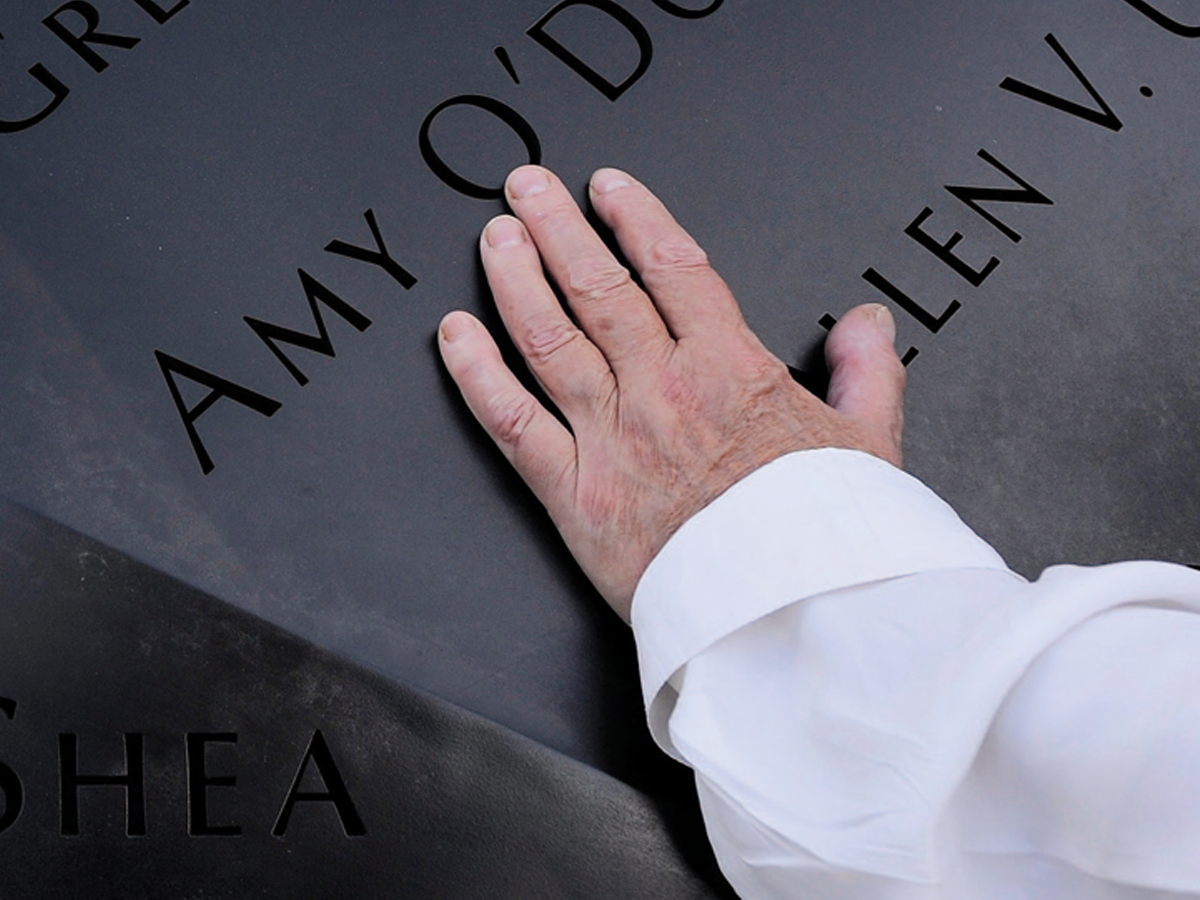
Before&After: Optima: The Typeface of 9/11
How Optima brings dignity and humanity to the National September 11th Memorial.