




Readers of my columns may think I’m hopelessly stuck in the past, clinging to an era when type was set without letter spacing, and constructing pages was a mechanical art. Not so, I promise, though I have always preferred processes I could see with my eyes and touch with my hands. The digital age turned everything in to an imaginary process — even if you understand what’s going on inside the processor, it is difficult to connect with it on anything but an intellectual level. But then I don’t need to physically connect with an automobile engine to appreciate the value of a car over a horse (though I think it helps a bit).
So despite the physical detachment that the digitization of page layout, image creation and design has brought, I am very excited about the future. As my end-of-the-year column I offer my humble vision of what comes next, and why I think we are on the brink of a change in page creation that is monumental — bigger than hot type, bigger than cold type and (hold on to your pica poles) bigger than Gutenberg himself. (Lightning did not strike me as I wrote those words, by the way.)
This change is so big, in fact, that it will put many of you out of business; cause loss of control for some; and dramatically change the way you and your clients collaborate. It will change the definition of creativity; change how we market goods and services; and change our very definition of pages and the value they have in our world.
And if you have needed extra muscle to haul all the useless catalogs and mail solicitations that hit our collective mailboxes this holiday season, you may also appreciate that in its ultimate incarnation, this change in how we create and distribute pages could have a very positive ecological effect and make the world a better place.
The End of Linear Process
The conversion of mechanical and analog processes into digital ones was just the beginning, and to think all we gained was some speed and efficiency is rather depressing. Throughout the history of publishing and printing technology, breakthroughs have been almost entirely about replacing one process with another — moveable type replacing scribes, offset replacing letterpress, paste-up replacing metal composition, and digital replacing analog. And while there have been great benefits along the way (cleaner, faster, safer, higher quality) we have not seen a fundamental change in the way we present information for centuries.
Yes, the Web certainly opened up access to more content, as did the process of desktop publishing. But we still work in an almost entirely linear process where content begins as low format data and through various technical and creative steps turns into something of greater value. And the bulk of information is still presented in a format that is best defined as “final,” even if it resides on a Web page that updates automatically with new information.
The creative process is essentially window dressing — we add it at the end of the process, just before we release our content to the world. We typically format in one direction, with little or no ongoing relationship between the original data and the final page. This not only should change, but it has to change if we’re going to realize the promise of an all-digital content world.
You see the fun begins when you realize that in an all-digital world, we don’t just replace old ways with more efficient new ones. We add an incredible set of tools to the arsenal of content design and delivery — kind of like discovering DNA in science. Things that weren’t possible or were misunderstood, suddenly make sense and whole new paths of discovery begin. We are shifting the entire publishing process from one of create, deliver and dispose, to one of demand, deliver and learn — the era of smart, round-trip content.
Finding the Babelfish of Publishing
The technical realities of this change are important only in a limited perspective, but they have to do mostly with the XML language, and the advent of networked computers and shared databases. Let’s just say that we’ve finally found the “babelfish” of content — a layer of interpretation and understanding that allows everyone and everything to communicate and share, and does it without anyone having to lose the language and nuance that makes them individual.
In fact, what’s so exciting about this new era of smart content, is that it puts the spotlight on individualism, and shifts a great deal of the editing and design process onto the individual and away from the intellectual and artistic elite. I’m sure when 16th Century aristocrats discovered that books were going to be available to the masses, they felt they would be misunderstood, underappreciated and perhaps even dangerous. Yet here we are, talking about opening the page creation process to everyone, and I’m not scared at all by that.
Automating Creativity
So when you combine XML with databases and then connect it all to a page production engine, you finally get the option of creating one-off publications and Web sites (or cell phone screens or whatever form information delivery takes). Based on knowledge either already gained about the reader, or choices made by them, the content, formatting and design of information will be only nominally controlled by the publisher. The consumer of the information will choose the format and presentation that they prefer.
The best analogy I can give is that of a group of people all photographing the same scene. The results will not only vary wildly based on location, height, vision, and other physical issues, but will be open to considerable interpretation by the photographers and the history they bring with them. It’s true that the professional, well-trained photographer may get the best shot, though that is certainly not guaranteed, and it’s also true the bulk of people may choose to take the same basic shot — mostly for lack of any other preference. But all of the photographers are capturing a slightly different moment in time, and no one picture is a better record than any other. And if you put the results to a vote, it is unlikely any one image would be considered the “best,” or most useful.
Pages in the future are going to be like photographs — a frozen moment in time, where information, structure and design all come together based on reader preferences, even if their choice is to specify no preferences. Everyone’s page of the same information can be different, and will exist only long enough to serve a purpose. Printed pages will take physical form, of course, but with variable data printing there may never be a “final” version of anything. And electronic pages are but a momentary window into information that is constantly streaming by, changing as it goes. Like photographs, some snapshots of this information will be better than others, and some may be worth saving and admiring by the reader.
Empowering the Consumer Without Sacrificing Style
So what does the automation of page production mean to the designer?
Well, for some it means an even more important role. Brands are going to be even more concerned with image and style, and are going to work very hard to empower customers with tools that allow them to express their individuality, but also maintain brand image and control. Don’t forget, we live in a world where conformity is the norm. Publishing will be like fashion — how you present information and how you allow consumers to customize it, may become more important to value than the actual content.
On a technical level, designers won’t be building final pages or publications, but rather designing templates and setting “rules” for how content behaves when it gets to its temporary destination in time. XML allows us to think of context and relationships as design elements — we can limit or guide what happens to our intellectual property, even if we aren’t quite sure what the final combination of content on a page might be. A fashion designer may cringe at the combination of clothes a consumer chooses to wear, or even how they wear it, but if they are truly good at establishing image, their brand transcends the realities of the day and comes to represent an attitude and a lifestyle that goes way beyond the function of the clothing. The value of information will depend more and more on style in the future.
I think graphic design will have to move to a new level of importance — it will be one of, if not the most significant elements of brand success, and it won’t be something that’s tacked on at the end of the information lifecycle. It will have to permeate every element of content a company produces. Data will have to be tagged up front in a way that anticipates its use on the back end. Format will have to be guided by a core understanding of brand values, and will have to come to represent the content owner’s essence as a company. Information by itself is meaningless — it will be the context and experience that matters.
But if you have pinned your success on mastering page-layout tools and the production process, you may find yourself rendered obsolete very quickly. Just as hot metal typesetters fell to computer operators, and paste-up artists fell to desktop tools, designers who think in the confines of page borders will fall too.
Remember, Gutenberg died a poor man, deeply in debt. Knowledge of new things does not guarantee success. You have to know how to implement the knowledge in commercially relevant ways.
Read more by Gene Gable.
This article was last modified on March 23, 2021
This article was first published on December 23, 2004
Commenting is easier and faster when you're logged in!
Recommended for you
Data Merging – Part 3
It’s been much longer than I expected finishing this three-part tutorial o...
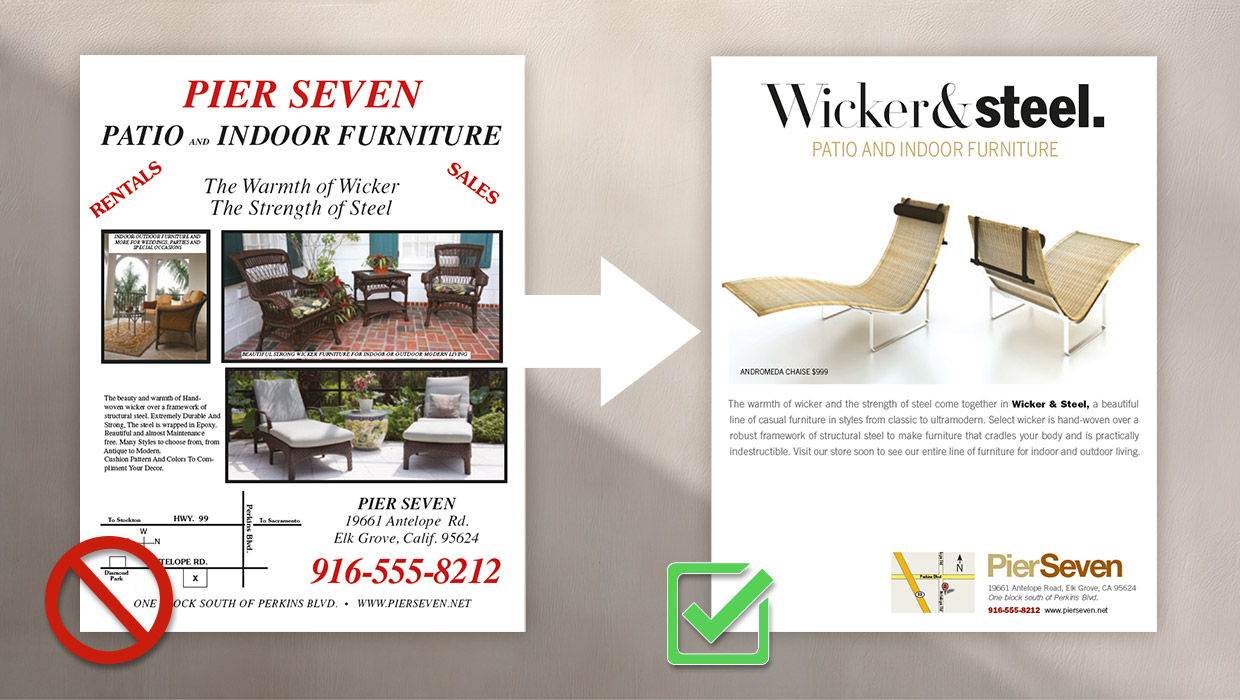
How to Be a Better Graphic Designer: Keep It Simple
In a world that shouts, the voice we truly hear is the one that speaks with calm...

Font Fetish: Sudtipos
Sudtipos is an Argentinian type foundry with a flair for the dramatic. I’m...