




Despite having made quite few trips to Florida over the years, I’ve never really had an opportunity to see much in the way of tourist attractions, which is too bad, as Florida has (and has had) some great ones. I’ve never been to Disney World or any of the adjacent theme parks, never been to the Cypress Gardens water ski show, never been to see baby alligators, and never had the opportunity to catch the mermaid show at Weeki Wachee Springs. About an hour north of Tampa, Weeki Wachee is located at the crossroads of U.S. 19 and State Road 50.
Weeki Wachee, which is a Seminole Indian name meaning “little spring” or “winding river,” is a very deep-water natural spring in the Weeki Wachee river which is fed by clear water from underground caverns – the spring is said to be so deep that the bottom has never been found. Popular with cave divers, the spring has been used in the filming of many underwater scenes in movies and TV shows as well as for the popular mermaid performances. The Weeki Wachee river runs for 12 miles into the Gulf of Mexico. Click on any image for a larger version.


The mermaid show was first introduced in 1947 by an ex-Navy swimmer named Newton Perry, who determined that the spring would be a perfect place for a roadside attraction. He conceived of a novel way for swimmers to breath underwater sucking air off of hoses hidden in the scenery – it was (and is) apparently a pretty difficult technique that requires quite a bit of practice.


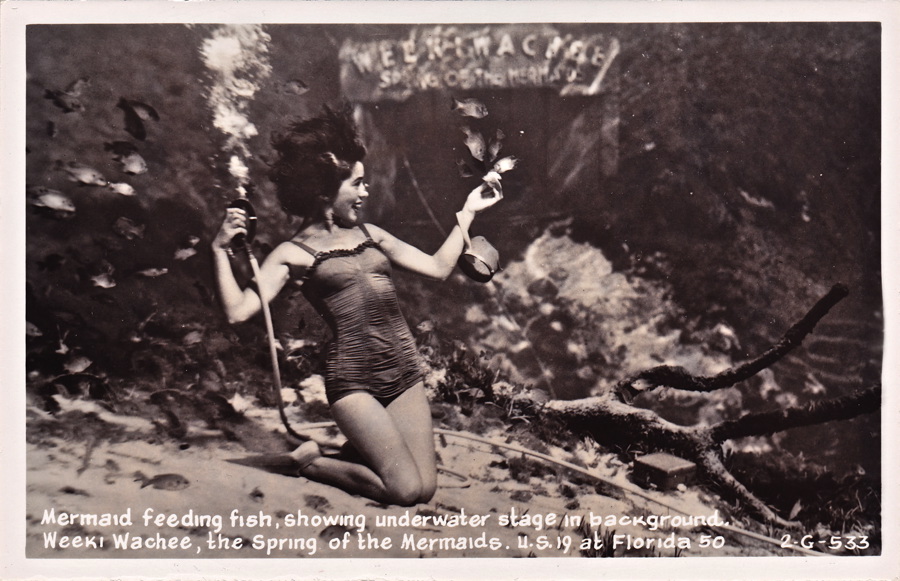
Between gulps of air the mermaids hold their breath for as long as possible while performing various maneuvers, which in the beginning included drinking soda out of a bottle and eating bananas.


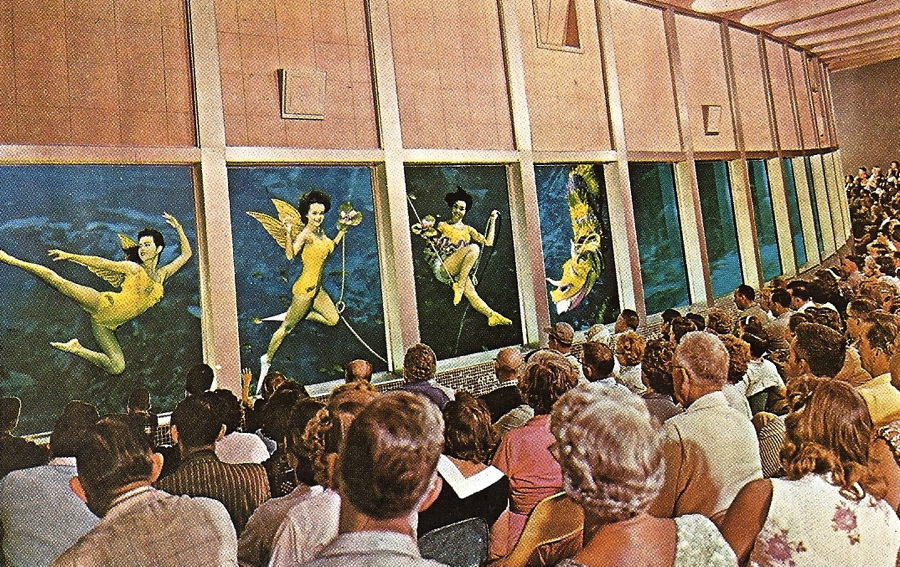
Perry built a small underwater theater into the shore where people could watch the mermaids perform. He found pretty girls, trained them to use the air hoses, and supplied them with mermaid costumes and various props. Over the years the show became more and more sophisticated, and after the springs were purchased by ABC in 1959, the company added more elaborate themes and choreography and expanded the theater.


In the early days, the mermaids would run out to the highway in their bathing suits when they heard a car approaching and signal the drivers to stop for the show. Over the years Weeki Wachee bumper stickers were a familiar site in the area and the attraction was very well known (Elvis Presley once attended a show there).
This article was last modified on February 28, 2021
This article was first published on September 28, 2012
Commenting is easier and faster when you're logged in!

Recommended for you

Neue Haas Unica: The Lost Sequel to Univers and Helvetica
Pardon me for waxing enthusiastic. Some things are just too cool to stay calm ab...

Main Actor 3.53 Review
This is a unique DV and analog video editor that is available on both Windows an...

Panasonic Lumix G7 First Impressions
There are many competitive options in the marketplace when it comes to buying a...