


Solve Difficult Exposure Problems with Photoshop

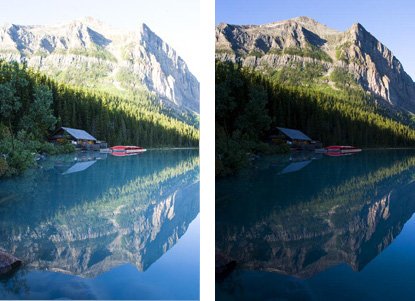
This excerpt courtesy Mark S. Johnson Photography and Radiant Vista.
When a scene you want to shoot includes a strong contrast between light and dark, it can be hard to properly expose the shot. A graduated neutral density filter (GND), which has a clear end and a neutral density end, helps by darkening the bright part of the scene and leaving the rest alone.
But what if you don’t have a GND, or the GND you do have isn’t the right type for the scene you want to shoot? Photoshop to the rescue!
In this article, Mark S. Johnson walks you through the process of combining two exposures into one perfect image using layer masks and gradients.
To get you started, the author has supplied two sample photos just right for this technique. Click on the image below to save the samples to your computer.
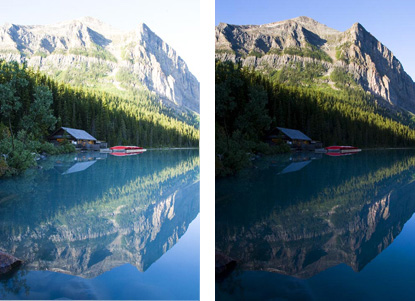
Click on the above image to download two sample files.
We’ve posted this article as a PDF file. To open the PDF file in your Web browser, click “Better Exposures.” You can also download the PDF to your machine for later viewing.
To open the PDF, you’ll need Adobe Acrobat or Adobe Reader. We highly recommend Adobe Reader 7.0 and above to view this PDF. Download the free Acrobat Reader..
To learn how to configure your browser for viewing PDF files, see the Adobe Reader tech support page.
This excerpt is part of a larger ebook on photographic techniques. For more about the Photographer’s Photoshop CS2 Companion, see the author’s bookstore.
This article was last modified on January 4, 2023
This article was first published on August 24, 2007
Commenting is easier and faster when you're logged in!

Recommended for you

Using InDesign, Illustrator, and Photoshop Together: Getting the Most From the Interface
When Adobe first created the concept of a “Creative Suite,” they wanted to make...

Quick Guide: Two-Pass Sharpening in Photoshop
The steps below summarize the two-pass sharpening technique described in “...
Heavy Metal Madness: Propaganda and Insight One Frame at a Time
Even the purest attempts at education and guidance carry with them an agenda of...