


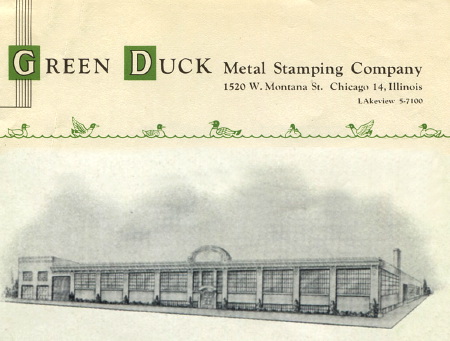
Of all the companies that have produced metal buttons and other novelty devices, few have equaled the contributions of the Green Duck Metal Stamping Company. Founded in Chicago in 1906, Green Duck created many of the most iconic buttons, clickers, and other giveaways that have defined American culture.
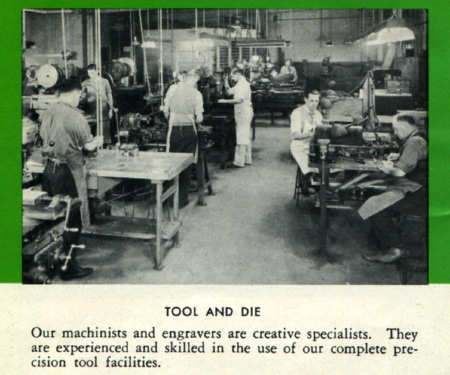
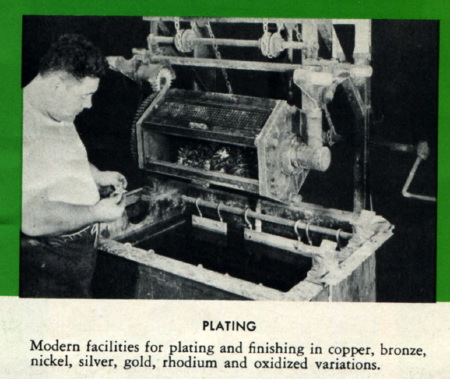
I was lucky to come across a 1952 catalog and several button samples from the company, which went out of business in 2004. During their almost 100-year history, Green Duck did work for political campaigns, made casino tokens and Mardi-Gras dubloons, and played an important role in the D-Day invasion at Normandy in June 1944.
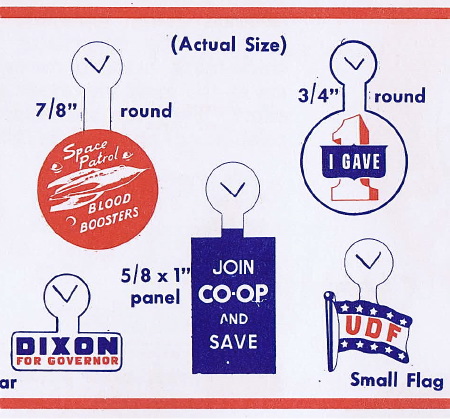


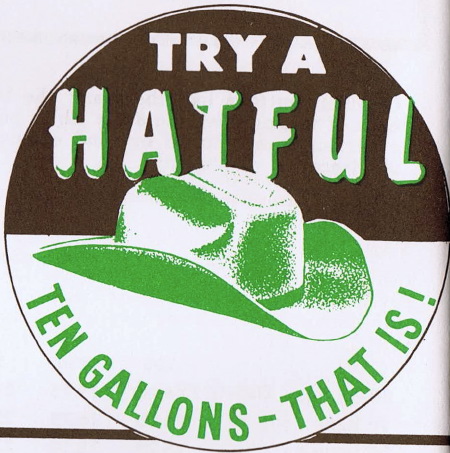
All of the images in this week’s column are from the 1952 catalog and support material, except The Beatles buttons (which is thanks to www.mybeatles.net) and the D-Day cricket image.

Buttons first appeared in American politics with the election of George Washington; supporters wore brass buttons that said “G.W. – Long Live the President.” Buttons became mass-market items in the 1896 presidential campaign that pitted William McKinley against William Jennings Bryan.
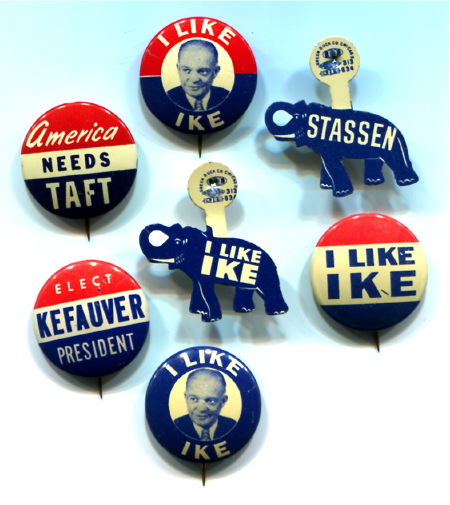
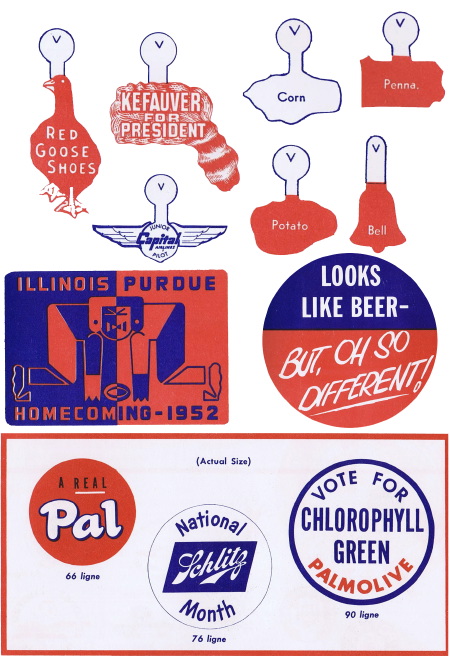
Green Duck produced many political buttons during its history, though none were more popular than the “I Like Ike” buttons from the 1952 presidential election, shown below.
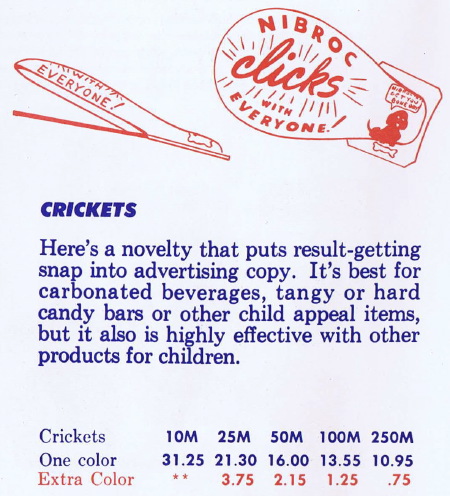
But before that, Green Duck played an interesting role in World War II, supplying the 101st and 82nd Airborne divisions of the United States Army with brass metal clickers. Soldiers clicked them to distinguish the Americans from the Germans. Two clicks meant “American,” and four clicks warned of a nearby German soldier.
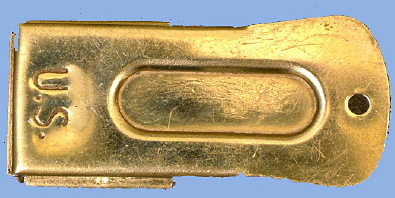
Unfortunately, according to many paratrooper reports at the time, the double-click sounded very similar to the cocking of German soldiers’ Mauser rifles. This caused some confusion, but on the whole the idea of using these clickers as a signaling device was effective.
The clickers were also called “crickets” because they were based on children’s toys that were often shaped like the insect. Green Duck also manufactured clickers that were used for training dolphins at Sea World in San Diego. To this day, many dog and other animal trainers use clickers as a cue in working on tricks and obedience.
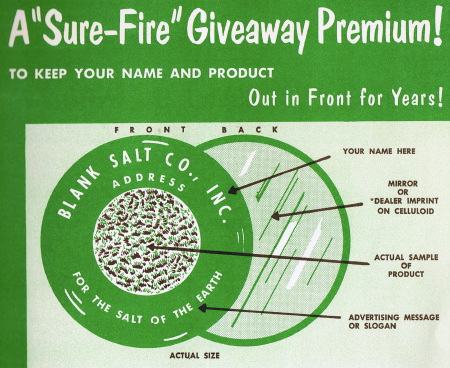
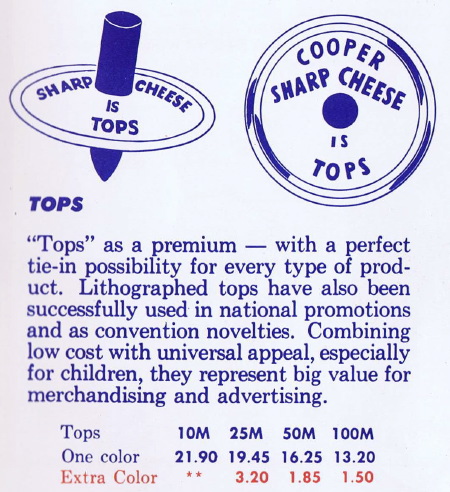
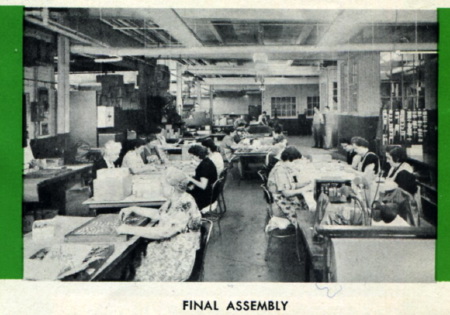
As a general metal stamping and printing business, Green Duck made a number of other items, too. These included needle-threaders, cellophane window buttons that could display products, key chains, spinning tops, and fraternity pins.


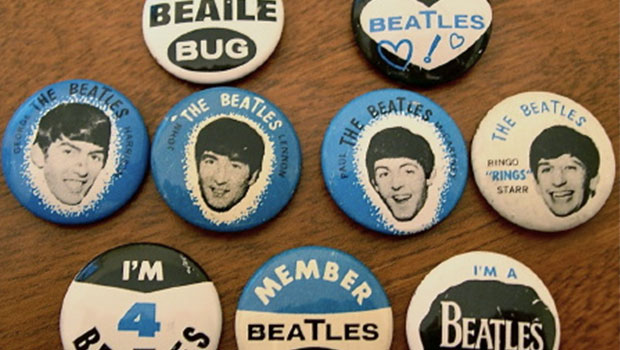
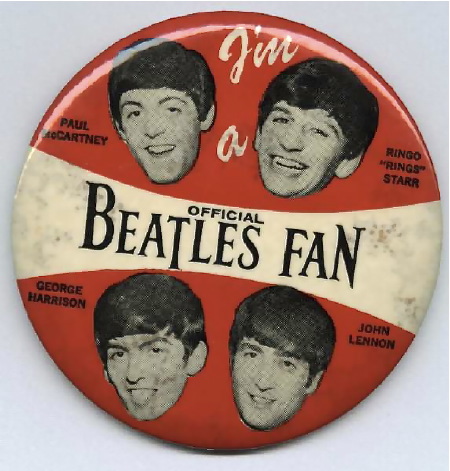
Another iconic series of buttons from Green Duck came out during the British Invasion, only this time not for soldiers but for music fans. The company produced official Beatles Fan Club materials, like those shown here.

The company was sold to a British firm in 1996. The button business isn’t what it once was, however, and the company finally closed its doors in 2004.
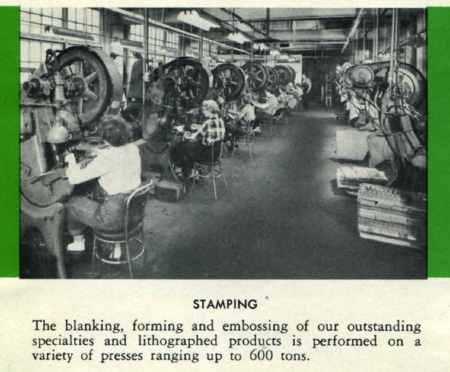
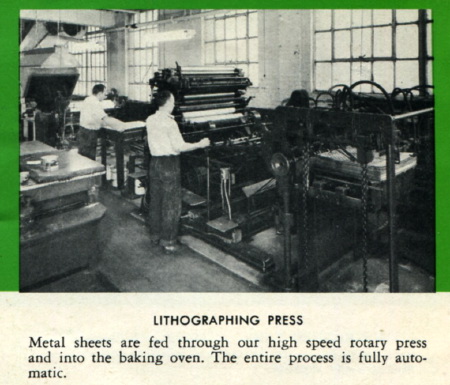
While I see a lot of “I Like Ike” buttons around, most of them are reproductions. So it gave me a chill to open the sample envelope that was supplied with the catalog and find a number of uncirculated buttons from 1952, all in excellent shape. Now if only I had a catalog from the 1960s with a full set of Beatles buttons. Those, I would highly prize. Oh yeah, yeah, yeah.
Follow me on Twitter and listen to my weekly podcast by visiting www.insidedigitaldesign.com, or simply search iTunes for postings by Gene Gable.
This article was last modified on March 19, 2021
This article was first published on May 8, 2009
Commenting is easier and faster when you're logged in!

Recommended for you

Scanning Around with Gene: You Too Can Be a Famous Artist
A recent thrift store stop netted the source for today’s column, a look back to...

5 Ways Photography Skills Can Improve Your Graphic Design
For some, making the connection between photography and graphic design is pretty...

Social Media Guide For Graphic Designers
As Creative Professionals we can’t ignore the value of Social Media and wh...