



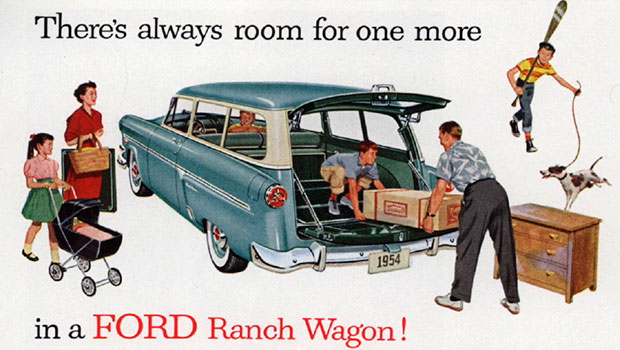
Until Chrysler introduced the first mini-van in 1983, most American families with more than two kids probably owned a station wagon at one time or another. In some ways the station wagon exemplified the American auto industry in its heyday — big, heavy, and hard to park. But we loved them as kids, and piling in the station wagon often represented a fun family outing, whether the destination was the ice cream parlor on a hot summer day or a long road trip where sleepy little ones could curl up in the way back for a nap.
Station wagons weren’t just automobiles; they were often extensions of the home. Big enough to transport a lot of gear, the station wagon was the vehicle of choice for adventuresome families travelling to the beach, campground, or lake. Their big engines were plenty powerful to pull a trailer or boat, and while the kids might sleep in a tent, Mom and Dad could always stretch out in the back of the wagon, where comfort and privacy were a bit better.
Click on any image below to see a larger version.


And thanks to their large size, station wagons were quite the canvas for automobile designers, who used the expansive stretches of metal for two-tone color schemes, fake-wood panels, and all sorts of chrome ornaments and special features.


Originally used almost exclusively for transporting people from the train station to home, vehicles with larger back ends (to hold luggage) were part of a broader class of conveyance known simply as “wagons,” which of course pre-dates motorized vehicles. But because the first enclosed motor vehicles with extra room in the rear were so tied to the era of rail travel, the term station (for train station) and wagon were linked, and the term stuck.


It wasn’t until after World War II that station wagons made the transition from commercial transportation to popular family cars. Through the late 1940s, many had panels made of wood, due in part to weight issues and steel shortages in wartime. Thus the “Woody” wagon:

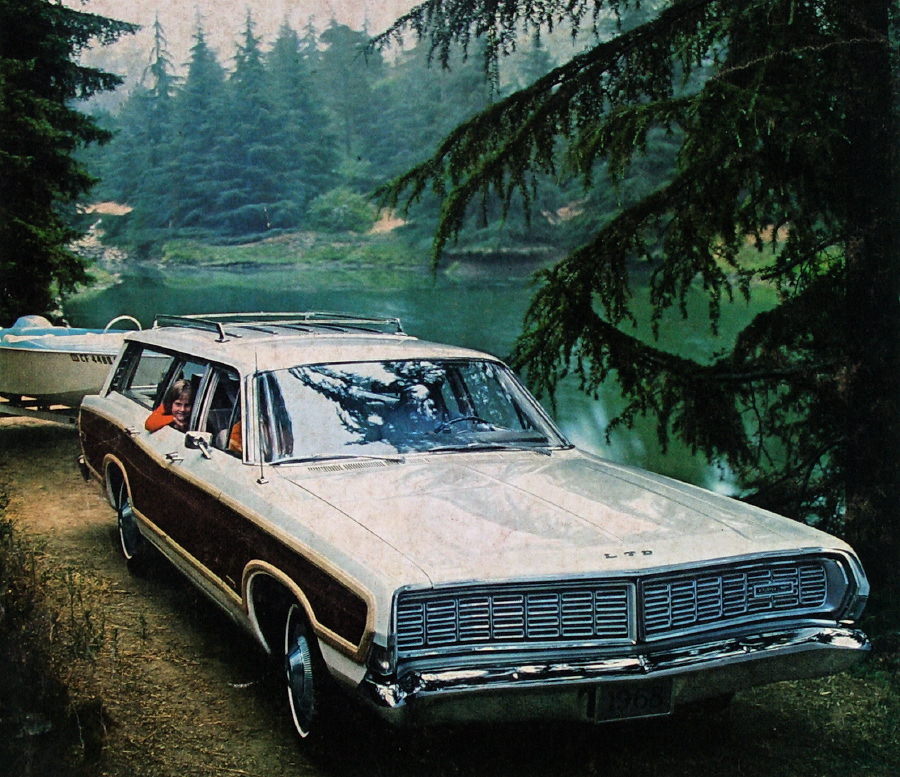
By the end of the ’50s, station wagons amounted to 17% of all U.S. car sales, and many versions were available, from entry-level economy models to high-end luxury versions. Manufacturers worked hard to top each other and wagons got a lot of distinguishing features, from all-around glass roofs to swing-out tailgates to push-button transmissions.


Want to know what kind of wagon Gene’s family drove? Go to page 2!
This article was last modified on April 20, 2023
This article was first published on May 18, 2012
Commenting is easier and faster when you're logged in!

Recommended for you

FSI FontShop International Releases New FontFonts, Updates FF DIN, FF Meta, FF Scala, and Other Designs
FSI FontShop International today announced the latest additions to its award-win...

One Good Kern Deserves Another
The old saw that “it’s the little things that count” was surel...
Fontlab Ltd. Announces the Release of FontLab Studio 5 for Mac OS X
Fontlab Ltd. is proud to announce the release of its 12th product this year. Aft...